
 Instagram
  Youtube
  Whatsapp
 Why Progressive Web Apps Are Becoming a Smarter Alternative to Traditional Apps
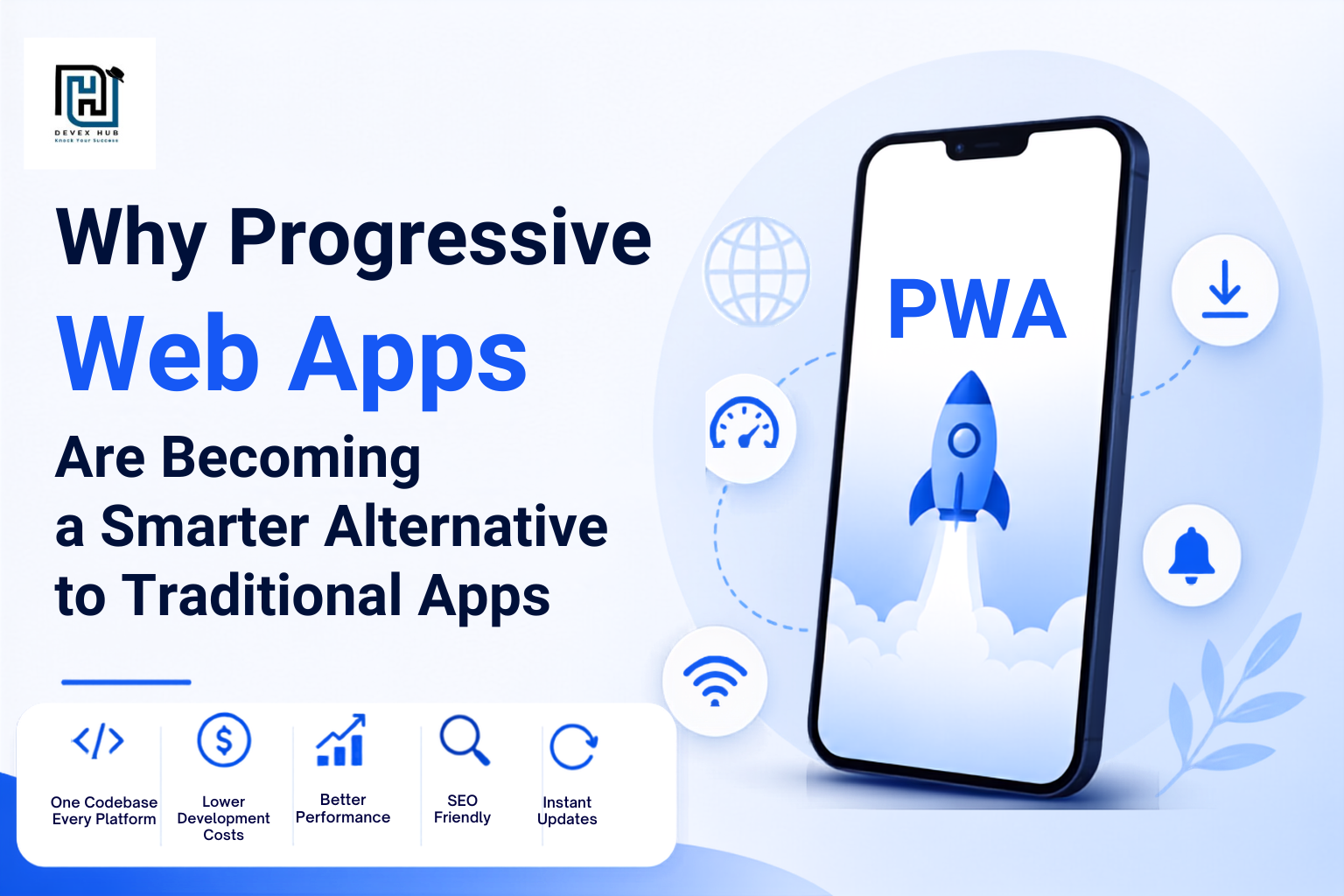
Think about the last time you hesitated before downloading an app just to check a delivery status or book a table. That tiny friction — "Is it really worth 40MB of storage for this?" — is exactly why Progressive Web Apps (PWAs) are having a moment. They load like websites, behave like apps, and skip the app store altogether. For businesses trying to reach users faster and cheaper, that's a pretty big deal.
Let's break down why PWAs are quickly becoming the smarter choice over traditional native apps.
What Exactly Is a Progressive Web App?
A PWA is essentially a website built with modern web technologies (HTML, CSS, JavaScript) that behaves like a native mobile app. It can:
- Work offline or on low-quality networks
- Send push notifications
- Be "installed" on a home screen without an app store
- Load instantly, almost like a native app
No downloads. No updates to approve. No storage anxiety. Just tap a link, and it works.
Why Businesses Are Switching to PWAs
1. One Codebase, Every Platform
Traditional apps usually need separate development for iOS and Android, which means double the cost and double the maintenance. PWAs run on a single codebase across devices and browsers, which is exactly why more companies now approach the best web development company in India to build cross-platform solutions instead of native-only apps.
2. Lower Development and Maintenance Costs
Since there's no need to maintain multiple codebases or go through app store approval cycles, businesses save significantly on:
- Development time
- Testing across platforms
- Long-term maintenance
- App store commission fees
3. Better Performance on Low-End Devices
PWAs are lightweight and cache smartly, so they perform well even on devices with limited storage or slower internet, a huge advantage in markets where mobile data isn't always reliable.
4. No App Store Gatekeeping
Native apps depend on approval processes, review delays, and platform policies. PWAs are hosted like websites, so updates go live instantly without waiting for anyone's permission.
5. SEO-Friendly by Design
Unlike native apps that live inside app stores, PWAs are indexable by search engines. That means better visibility, more organic traffic, and stronger discoverability, something businesses working with the best software development company in India are increasingly prioritizing.
PWAs and the AI Factor
Here's where things get interesting. As AI-driven search and recommendation systems (think AI Overviews, chat-based assistants, and smart search engines) reshape how users discover content, speed and structure matter more than ever. AI ranking systems tend to favor:
- Fast-loading, mobile-optimized experiences
- Clean, crawlable content
- Low bounce rates and high engagement
- Secure (HTTPS) and reliable performance
PWAs check almost all these boxes naturally, which is why they're aligning well with how AI-powered search is evolving. Combine that with AI automation services like AI chatbots, smart personalization, or automated customer support and a PWA becomes not just an app alternative, but a genuinely intelligent digital experience.
Real Benefits Businesses Are Seeing
Companies that have shifted to PWAs commonly report:
- Higher conversion rates: because there's zero installation friction
- Improved user retention: thanks to push notifications and home-screen access
- Reduced bounce rates: since pages load in seconds, not minutes
- Lower bounce-to-install drop-off: a major pain point with native apps
For startups and small businesses especially, this is a cost-effective way to compete with bigger players without a bigger budget.
Are PWAs Right for Every Business?
Not always. Certain apps still need deep hardware access, think advanced camera features, Bluetooth integrations, or heavy background processing where native apps remain the better fit. But for the majority of businesses e-commerce stores, service platforms, content sites, booking systems a PWA covers 90% of what's needed at a fraction of the cost.
This is why many businesses now consult a best web development company in Mohali or similar regional experts who understand both PWA architecture and local market needs, ensuring the solution is tailored rather than templated.
Frequently Asked Questions
1. What is a Progressive Web App (PWA)?
A PWA is a modern website that works like a native app, with features such as offline access, push notifications, and home-screen installation.
2. Are PWAs cheaper than native apps?
Yes. A single PWA codebase can work across multiple devices, reducing development and maintenance costs.
3. Do PWAs work without an internet connection?
Yes. Service workers can cache important content, allowing certain features to work offline or with a weak connection.
4. Can a PWA replace a native app entirely?
For many businesses, yes. However, apps requiring advanced hardware features may still benefit from native development.
5. Do PWAs help with SEO and AI search visibility?
They can help indirectly through faster performance, mobile optimization, and crawlable content, while overall visibility depends on broader SEO factors.
Final Thoughts
Progressive Web Apps (PWAs) are becoming a practical solution for businesses looking to deliver fast, mobile-first digital experiences without requiring users to download a traditional app. When combined with AI-driven automation and modern web technologies, PWAs can improve engagement, accessibility, and overall user experience. They can also help businesses reach users across different devices while reducing development and maintenance costs.
With the right strategy, a PWA can provide an app-like experience while maintaining the flexibility of the web. Whether you're a startup or an established business, contact us today to build a reliable, scalable, and future-ready PWA tailored to your business needs.



Comments
Post a Comment