
 Instagram
  Youtube
  Whatsapp
 How to Optimize Your Website for AI Search and Generative Engines
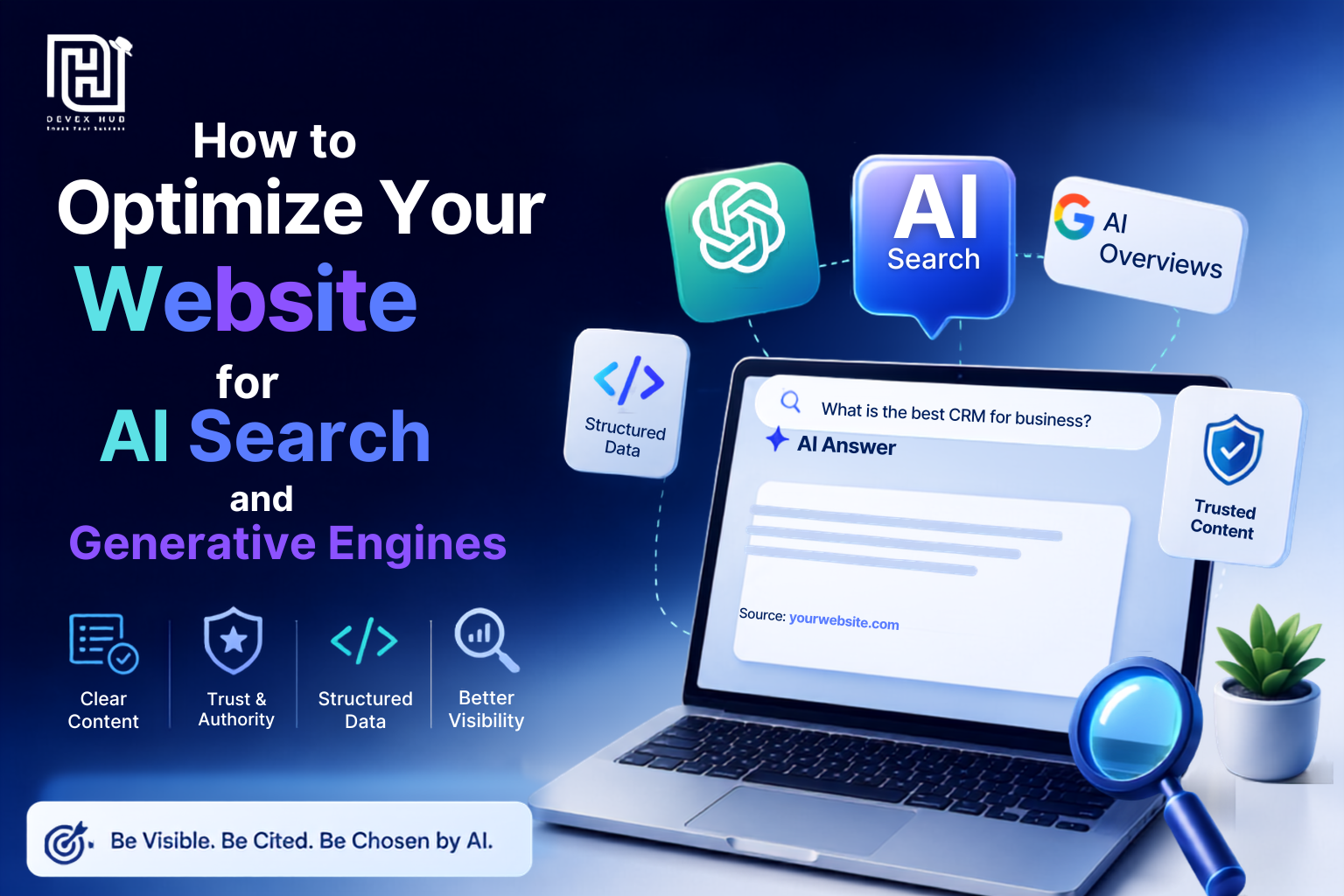
Search is changing fast. AI-powered engines like ChatGPT, Google's AI Overviews, and Perplexity don't just list links anymore, they generate answers directly. If your website isn't structured to be "readable" and "citable" by these systems, you could be missing out on a huge chunk of visibility.
So, how do you make sure your website shows up when someone asks an AI assistant a question? Let's break it down.
What Exactly Is AI Search Optimization?
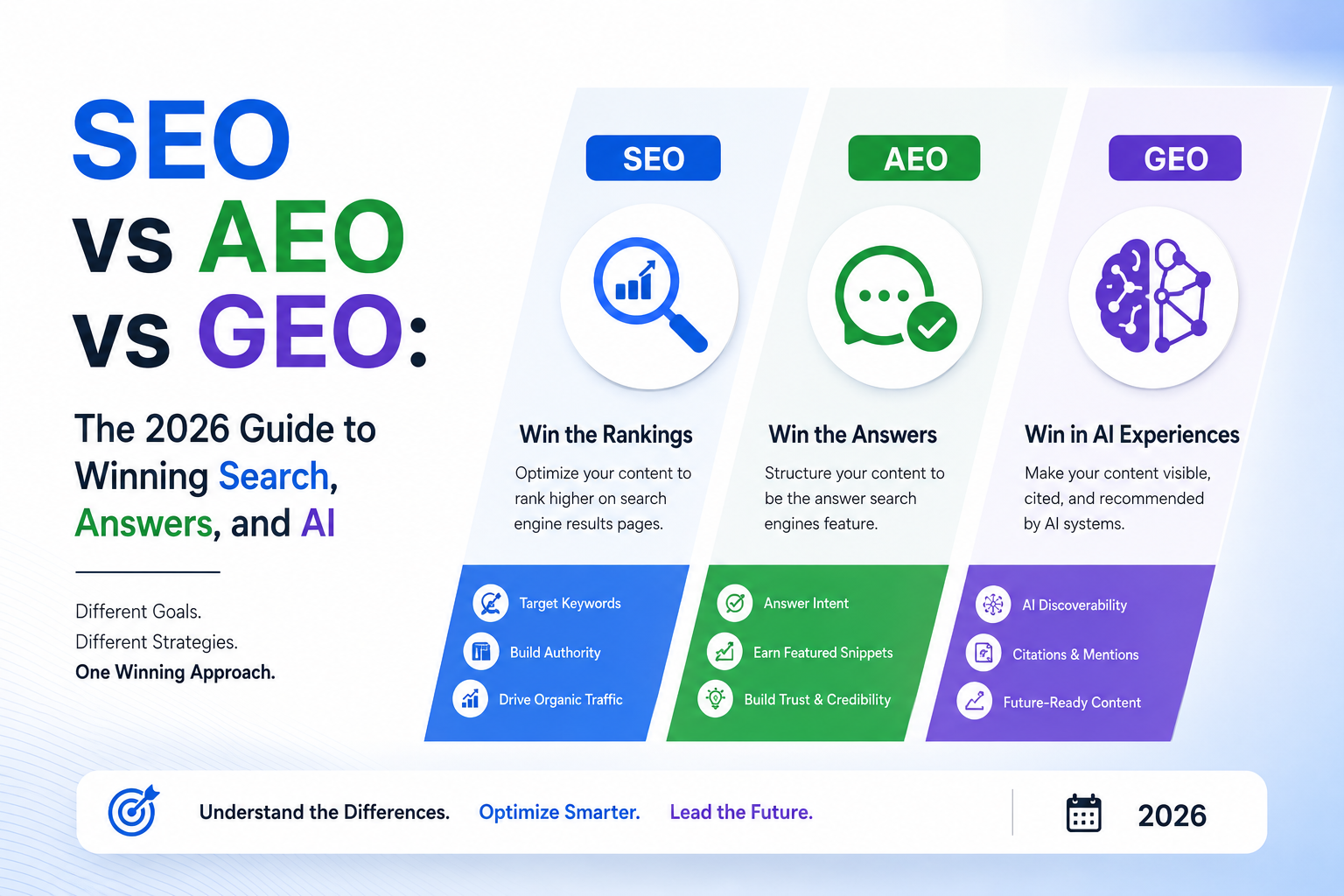
AI search optimization (GEO) is the practice of structuring your content so that AI models can easily crawl, understand, summarize, and cite it. Unlike traditional SEO, which leans heavily on keywords, backlinks, and page authority, GEO shifts the focus toward how "machine-readable" and trustworthy your content actually is, while AI integration services can help businesses adopt AI-driven technologies.
Specifically, it focuses on:
- Clarity and structure of information, so AI models can parse it without ambiguity
- Trustworthiness and authority of your content, since AI models are trained to avoid citing unreliable sources
- Extractability, meaning how easily a specific fact, statistic, or answer can be pulled out of your page
- Structured data, which helps machines understand the context and relationships within your content
- Semantic relevance, meaning how well your content matches the actual intent behind a question, not just the exact keywords
Think of it this way: Traditional SEO gets you a spot on a shelf. AI optimization gets you picked up and handed directly to the customer.
Why This Matters Now More Than Ever
- User behavior is shifting. Studies on AI adoption show a growing share of users are asking chatbots direct questions instead of scrolling through search results, especially for research, comparisons, and how-to queries.
- AI Overviews are eating clicks. Google's AI-generated summaries often answer the query right there on the results page, reducing the need to visit a website at all, unless your content stands out enough to be cited by name.
- Voice search and AI assistants are growing. Devices like Alexa, Siri, and Google Assistant increasingly pull from AI-processed, structured content rather than raw web pages.
- Answer engines are becoming a discovery channel. Tools like Perplexity and ChatGPT function like a new front door to the internet, and being cited inside an AI answer builds brand credibility even without a click.
- Early movers win. Just like early SEO adopters dominated search results for years, businesses optimizing for AI now will have a significant head start once the competition catches up.
Practical Ways to Optimize Your Website for AI Search
Here's where it gets actionable. Let's go through the key strategies you can start implementing today, along with the reasoning behind each one.
1. Write Clear, Structured Content
AI models are trained to parse and summarize information efficiently, and cluttered, wordy content makes that harder. To structure your content well:
- Use descriptive headings and subheadings (H1, H2, H3) that clearly outline what each section covers
- Keep paragraphs short, ideally 2 to 4 sentences, instead of dense text blocks
- Use bullet points and numbered lists for step-by-step information or comparisons
- Add FAQ sections that directly answer common questions in a Q&A format
- Include a clear introduction and conclusion so AI models can quickly identify the core takeaway
The easier your content is to scan, the easier it is for an AI model to extract and summarize it accurately, which increases the odds of your content being cited as a source. Not sure where to start? Working with the best SEO company in Mohali can help you audit your existing content and rebuild it with this structure in mind.
2. Focus on E-E-A-T (Experience, Expertise, Authoritativeness, Trustworthiness)
AI systems are trained to prioritize credible, well-vetted sources over generic or thin content. This concept, originally from Google's search quality guidelines, applies even more strongly to generative engines. To build trust:
- Include author bios with real credentials and relevant experience
- Cite reputable sources, studies, and original data wherever possible
- Keep information accurate, fact-checked, and up to date
- Avoid vague, unsupported, or exaggerated claims
- Display trust signals like client testimonials, certifications, or case studies
3. Use Structured Data and Schema Markup
Schema markup is code you add to your website that explicitly tells search engines and AI crawlers what your content means, not just what it says. This structured layer acts like a translator between your content and the AI system reading it. Common schema types worth implementing include:
- FAQ schema, which helps AI models pull direct question-and-answer pairs
- Article schema, which clarifies authorship, publish date, and topic
- Product schema (for e-commerce), which surfaces pricing, availability, and reviews
- How-to schema, which breaks down step-by-step processes clearly
- Organization schema, which establishes your brand's identity and legitimacy
Setting this up correctly often requires technical know-how, especially if you're managing this across a large or complex website with hundreds of pages. This is where professional AI integration services can make the process far smoother and error-free.
4. Answer Questions Directly
AI-generated answers often pull from content that directly and concisely answers a query near the top of the page, rather than burying the answer three paragraphs in. To improve this:
- Start each section with a direct, standalone answer, then expand with supporting details
- Use question-based headings that mirror how real users phrase their queries (e.g., "What is Generative Engine Optimization?")
- Keep the core answer digestible, ideally under 50 to 60 words, so it can be lifted cleanly into an AI-generated response
- Follow up with context, examples, or data to add depth for readers who want more
5. Build Topical Authority
AI models favor websites that demonstrate deep, consistent expertise on a subject rather than shallow, one-off coverage. To build topical authority:
- Create content clusters around core topics, with a central pillar page linking to related subtopics
- Interlink related articles on your site so both users and AI crawlers understand how your content connects
- Regularly update older content with fresh data, examples, and insights to keep it relevant
- Cover a topic comprehensively, addressing common questions, objections, and edge cases, rather than writing isolated, disconnected posts
If this feels like a lot to manage in-house, the best software development company in India can help you build the technical backbone needed to support this kind of content strategy at scale.
6. Optimize for Multi-Platform Visibility
Your content doesn't just need to rank on Google anymore. It needs to be discoverable across:
- AI chat platforms like ChatGPT, Claude, and Gemini
- Voice assistants like Alexa, Siri, and Google Assistant
- Traditional search engines and their AI Overview features
- Social and video platforms that now include AI-generated summaries
Repurposing your content into different formats, such as short videos, infographics, and podcasts, increases the chances of being picked up and referenced by multiple AI systems, not just one.
7. Improve Technical Performance and Crawlability
AI crawlers, much like traditional search bots, need clean access to your content to process it properly. Make sure to:
- Maintain fast page load speeds and mobile-friendly design
- Use clean, semantic HTML rather than content buried in complex JavaScript
- Submit updated sitemaps and ensure your robots.txt file allows AI crawlers where appropriate
- Fix broken links, duplicate content, and crawl errors regularly
Businesses looking to automate parts of this process, from content audits to performance monitoring, are increasingly turning to AI automation services to save time and reduce manual errors.
8. Monitor and Adapt
AI search is still evolving rapidly, so treat this as an ongoing process rather than a one-time fix:
- Track how often your brand appears in AI-generated answers using emerging AI visibility tools
- Monitor referral traffic coming from AI platforms in your analytics
- Continuously refine content based on what's actually getting cited and what isn't
- Stay updated on algorithm and model changes from major AI providers
Final Thoughts
Optimizing for AI search doesn't mean leaving SEO behind it means evolving with it. The best websites combine strong technical SEO, useful content, clear structure, and trustworthy information that AI systems can understand and cite. Start with your top-performing pages, apply a few GEO strategies, and track the results. As AI search continues to grow, adapting early can give your business a competitive advantage.
Need help preparing your website for SEO and AI search? Contact us today for expert guidance and strategies designed to improve your online visibility.



Comments
Post a Comment