
Managing a modern workforce involves more than assigning responsibilities and monitoring employee performance. Businesses must coordinate teams, manage schedules, track productivity, handle administrative activities, and respond to changing operational requirements. As organisations grow, managing these responsibilities manually can become time-consuming and difficult to scale.
Artificial intelligence is introducing a smarter approach to workforce management. By combining predictive analytics, intelligent workflows, and automated decision-making, businesses can simplify everyday operations and improve resource utilisation.
With Agentic AI, organisations can move beyond basic task automation towards systems that understand objectives, coordinate activities, and perform multi-step operations with appropriate human supervision.
How Is AI Transforming Traditional Workforce Management?
Traditional workforce management often relies on spreadsheets, emails, manual reporting, and disconnected software applications. These methods can create communication gaps, scheduling conflicts, and delays in important decisions.
AI helps businesses address these challenges by analysing operational information, identifying patterns, and recommending suitable actions.
For example, when customer demand increases, intelligent systems can analyse previous workloads, identify staffing requirements, and recommend adjustments to employee schedules. Managers can use these insights to distribute responsibilities more effectively instead of reacting to problems after they occur.
5 Ways Intelligent Automation Is Improving Workforce Management
1. Intelligent Employee Scheduling
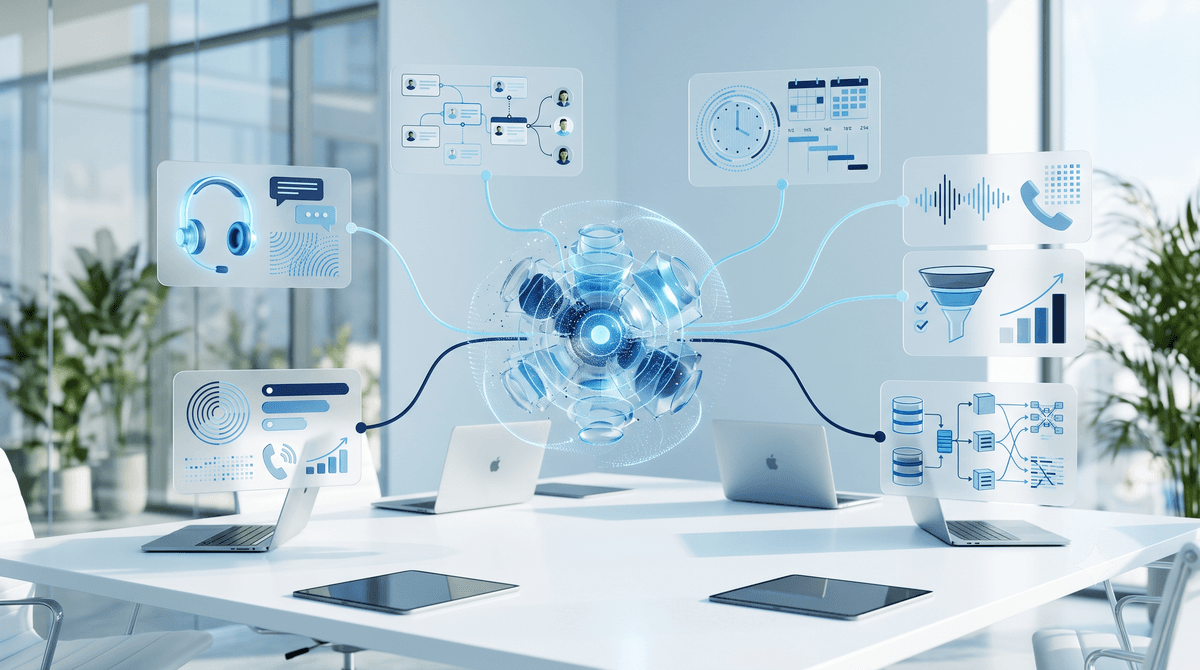
Creating employee schedules manually can be challenging, particularly for organisations managing multiple departments or shifts. AI-powered scheduling systems can consider employee availability, workload, skills, working hours, and business demand when recommending suitable schedules.
This helps managers reduce scheduling conflicts, maintain balanced workloads, and make better use of available resources.
2. Automating Administrative Responsibilities
Employee onboarding, attendance management, leave approvals, document collection, and routine reporting involve repetitive activities that consume valuable working hours.
Intelligent workflows can automate these processes. For instance, when a new employee joins, an automated system can initiate documentation, send onboarding instructions, notify the HR department, and schedule introductory meetings.
Businesses can also explore customized AI agent development solutions to handle specific operational requirements across different departments.
3. Smarter Employee Communication
Communication gaps can affect collaboration and delay project completion. AI-powered assistants can help employees access internal information, receive updates, and get answers to frequently asked questions.
For example, an employee can ask a virtual assistant about company policies, leave procedures, or project updates without waiting for manual responses.
These capabilities improve information accessibility while allowing HR teams to focus on more complex employee requirements.
4. Performance Monitoring and Workforce Analytics
Understanding employee productivity requires more than counting completed tasks. Managers need visibility into project progress, resource utilisation, operational delays, and workload distribution.
AI-driven analytics can process information from different business applications and highlight patterns that require attention.
For example, if a department consistently misses deadlines, managers can investigate whether the underlying issue involves resource shortages, inefficient processes, or uneven task allocation.
5. Predictive Workforce Planning
Workforce requirements change with customer demand, seasonal activities, new projects, and organisational growth.
Predictive analytics can examine historical information and current business trends to estimate future staffing requirements.
This allows businesses to prepare schedules, plan recruitment, and allocate resources before operational pressure increases.
Selecting the Right AI Technology for Workforce Management
Not every workforce challenge requires advanced AI capabilities. The right solution depends on the task, business objectives, and level of automation needed. Businesses should first identify the problem they want to solve and then choose a technology that delivers practical results without adding unnecessary complexity.
Workforce challenge
Recommended AI technology
Predict future employee requirements
Predictive workforce analytics
Create balanced employee shifts
Intelligent scheduling systems
Handle employee questions and requests
AI-powered virtual assistants
Process resumes and employee records
AI-based document intelligence
Manage tasks across multiple business applications
Agentic AI and workflow automation
Identify workload imbalances
AI-driven workforce analytics
For businesses looking to streamline multiple operational activities, AI Workflow Automation can connect different applications and automate repetitive tasks such as employee onboarding, document processing, information sharing, and internal notifications. These connected workflows help teams manage daily responsibilities more efficiently while minimising manual effort.
However, not every process requires the same level of intelligence. Rule-based automation or specialised AI tools may be sufficient for straightforward activities, while operations involving multiple decisions, applications, and dependencies can benefit from Agentic AI solutions.
The key is to select technology that addresses specific business challenges, integrates with existing systems, and delivers measurable improvements.
How to Measure ROI From Workforce Management AI?
Implementing intelligent technology is an investment, so businesses should evaluate whether it delivers measurable operational improvements.
Start by recording existing performance levels before introducing automation. This creates a baseline for comparing results after implementation.
Some important performance indicators include:
Time savings: Measure the reduction in hours spent on repetitive administrative activities.
Operational costs: Compare expenses before and after introducing automated processes.
Scheduling efficiency: Track scheduling conflicts, overtime, and resource utilisation.
Task completion rates: Evaluate whether automated workflows reduce delays and improve turnaround times.
Employee productivity: Monitor whether teams can complete important responsibilities with fewer administrative interruptions.
Businesses should also consider implementation, integration, maintenance, and training costs when calculating overall returns.
A simple ROI calculation can help:
ROI (%) = [(Financial Benefits − Total Investment) ÷ Total Investment] × 100
Regular performance reviews help organisations understand which processes are delivering value and where further improvements are required.
The Future of Workforce Management Is Intelligent and Connected
Workforce management is moving towards a more connected and data-driven approach. Businesses that combine human expertise with intelligent technologies can improve coordination, simplify operations, and respond more effectively to changing requirements.
The objective is not to replace employees but to create an environment where people and technology work together.
At Devex Hub, we help businesses simplify complex operations through AI automation, intelligent workflows, and advanced digital solutions. From workflow integration to AI-powered business systems, our team develops technologies that support efficiency and sustainable growth.
Explore our AI Automation Services to understand how intelligent technology can improve your business operations.
Frequently Asked Questions
1. What Are the Ways to Apply AI to Workforce Planning?
AI can support workforce planning through demand forecasting, employee scheduling, workload analysis, resource allocation, and performance monitoring. These capabilities help businesses anticipate staffing requirements and make informed operational decisions.
2. How Does Agentic AI Differ From Traditional Automation?
Traditional automation generally follows predefined rules and instructions. Agentic AI can interpret objectives, determine suitable actions, and coordinate multiple tasks across connected applications while operating within defined permissions.
3. Can AI Automate Employee Scheduling?
Yes. AI-powered scheduling tools can analyse employee availability, shift requirements, workload patterns, and business demand to recommend suitable schedules and reduce conflicts.
4. Is AI Suitable for Small and Medium-Sized Businesses?
Yes. Smaller organisations can begin with practical applications such as automated onboarding, employee communication, attendance workflows, and routine reporting. They can expand their implementation as operational requirements grow.
5. How Can Businesses Get Started With Workforce Automation?
Businesses should begin by identifying repetitive processes, evaluating existing software, and selecting suitable AI technologies. Starting with a small implementation, measuring its results, and gradually expanding successful workflows can make the transition more manageable.
Want help putting this into practice?
We scope the use case with you, build it on your real data and stay on after launch.
Book a call